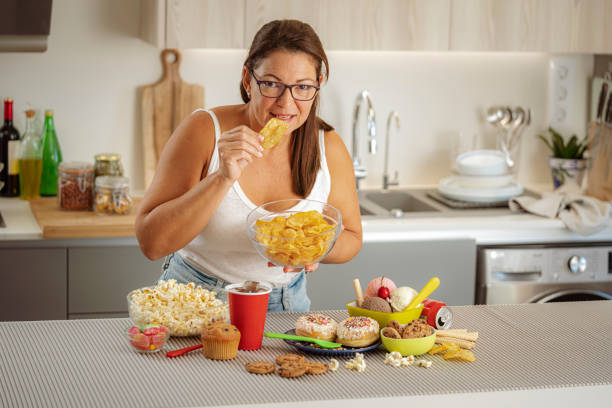
It’s weird, isn’t it? You grab a bag of chips thinking, “Okay, just a couple,” and somehow the whole bag disappears before you even realize. It’s like these foods have some kind of sneaky superpower. And yeah, I’ve totally been there—sitting on my couch at 11 PM, wondering how half a pizza vanished in twenty minutes. The truth is, it’s not just your lack of self-control. There’s a mix of science, psychology, and, honestly, a bit of corporate genius behind it.
The Science of Why Your Brain Loves Junk
Our brains are funny little things. They’re wired to chase pleasure, and certain foods hit that sweet spot perfectly. Sugar, salt, and fat—these aren’t just random ingredients; they’re like brain fireworks. When you eat them, your brain releases dopamine, the “feel-good” chemical. Dopamine is basically telling your brain, “Hey, do that again!” That’s why that chocolate cake seems like heaven, even if your stomach protests later. And don’t get me started on the combo of fat and sugar together—it’s like a cheat code for happiness.
What blows my mind is how our ancestors’ brains are involved in this. Back in the day, sugar and fat were rare treasures, like winning the lottery of calories. Our bodies evolved to crave them because we needed energy to survive. Today? You can order a double cheeseburger and a milkshake without leaving your couch. Our ancient brain wiring hasn’t quite caught up to the modern buffet of options, so yeah… it’s like giving a kid a joystick that controls the universe.
Food Companies Know You Better Than You Know Yourself
Ever noticed how snacks are never just “okay”? They’re engineered to hit your taste buds in just the right way. There’s this term called the “bliss point,” which is basically the perfect balance of sugar, salt, and fat that makes your brain scream “MORE!” Food scientists spend years tweaking recipes to make sure we keep coming back. And honestly, it works. Look at TikTok—people posting themselves eating the newest “crispy cheesy fries” or some wild dessert hack. It’s like everyone’s feeding each other’s cravings in real-time. Social media isn’t just entertainment anymore; it’s basically a snack enabler.
Addictive Doesn’t Always Mean Illegal
Here’s a fun (or scary?) fact: research shows some highly processed foods can trigger brain responses similar to addictive drugs, minus the jail time. A study once showed that rats preferred sugar water over cocaine. Yeah, you read that right. Of course, humans aren’t rats, but it makes you think—maybe your midnight ice cream binge isn’t entirely your fault. Sometimes it feels like your brain is just a puppet, and the strings are made of chocolate syrup and crispy bacon.
Stress, Emotions, and That Comfort Food Trap
Another thing that hits me personally is emotional eating. Ever notice how a bad day makes a tub of ice cream suddenly look like a life raft? Our brains associate comfort foods with instant mood boosts. It’s a temporary fix, sure, but it’s satisfying in the moment. You scroll Instagram, see someone eating a gooey dessert, and suddenly you need it too. Food becomes a social thing as much as a biological need.
The Paradox of Guilt and Pleasure
Funny enough, the more we tell ourselves “don’t eat that, it’s bad for you,” the more we want it. It’s like a weird reverse psychology our brain plays on us. You know that feeling when you sneak a cookie and simultaneously feel like a rebel and a sinner? That rush of guilt mixed with pleasure actually heightens the dopamine hit. The more forbidden the food feels, the more addictive it becomes. I swear, my brain is basically a tiny soap opera, and I’m just along for the drama.
Why Understanding It Helps
Knowing why certain foods are addictive doesn’t mean you can’t enjoy them—it just means you understand the game. Moderation is cliché advice, but it’s also kinda true. Sometimes I make small swaps, like switching half my chocolate snack for fruit, or keeping chips out of reach so I don’t inhale them like a vacuum. And social accountability helps too—my friends know my weaknesses, so when we cook together, they subtly guide me away from “crispy doom.”
At the end of the day, food addiction isn’t about weakness; it’s about biology, design, and a little psychology. It’s okay to indulge, just don’t let it run your life. Personally, I’ve learned to laugh at my own late-night snack disasters instead of feeling guilty—they make life a bit more human.
If you ever want to dig deeper into this and maybe find ways to tame your cravings without giving up pizza entirely, there’s a lot of fascinating research out there. And no, you’re not alone scrolling TikTok at midnight, wondering why that cookie feels like it was made just for you.